Showing posts with label containers. Show all posts

Monday, June 27, 2011

Closet Storage

If I told you this mass of crazy mess lived in my house would you believe me? Well if I told you that today, I'd be lying, but if I told you last week I would unfortunately be telling the truth.


Sometimes even organized people have contained messes. It's true. Don't let us fool you too much!


The story behind this mess is simple. Due to lack of motivation and utter laziness this closet became a bottomless pit. I have seen this happen in so many people's homes. It is so easy to let the space fall by the wayside and allow junk to build up and take over. It became a problem in my house right off the bat when I moved in because no shelves were installed and nothing in particular was done to create an organized space. But that is no longer the case in my house! All I needed was a little motivation and a couple of hours.

Here's what I did to fix the problem:

I went on a mission to Target and Lowe's and found some stackable containers and a few shelves and I came back not having spent a whole lot of money, then got to work.

Small items now are housed in stackable containers and clearly labeled. Thank goodness for this shelf! You can also maybe see that I have photo albums and old yearbooks lined up here too. My loose photos are contained in either gift boxes or photo boxes.


I found these shelves at Lowe's - Target has a similar version. They are extremely inexpensive (yes, they look inexpensive too, but they do the job!) and easy to put together. They were just what I was looking for. I used the shelves to neatly store games, candles, magazines, old 3-ring binders and college paperwork that I am just not ready to part with, and wrapping paper/accessories. Hint: I use stackable bins to store ribbon and miscellaneous accessories and I use a gift bag to store other gift bags in. Wrapping paper is happily standing next to the shelf waiting for next Christmas.


These drawers I have had since I was in college, and boy did they come in handy in my dorm room! The top drawer is mostly an organized junk drawer - there is everything from a 3-hole punch to my camera to a box of checks. But! It's organized. In the bottom drawers I keep wires and electronic stuff. The wires are all coiled up individually and secured with a zip tie. If you don't have any zip ties, rubber bands or the twist ties that come on a loaf of bread work just as well!


We still haven't decided on any bookshelves that we can both agree on. So all of those books that were causing the problem in the first place are still here. But now they are neatly stacked in the corner instead of piled on top of each other.


I have high hopes that this new system of organization for the closet will work for me because everything is easily accessible, it's well-displayed and I am able to see everything inside the space to know what's there. No more laziness here! All I needed was a little time and a lot of motivation and the rest is history.

Read More!

Tuesday, March 29, 2011

Organizing on a Budget


While the current economic state is still in recovery mode, I am in spring cleaning mode, so I thought that I'd put together a melange of options and ideas for organizing on a budget this spring. It is completely possible with some creativity and time!


Let's start with the kitchen since that's where I started my spring cleaning this year.

Stackable Bamboo Organizers


These are perfect for silverware, utensils or even your junk drawer or office drawer. As low as $2.99 at The Container Store - wow!

Mesh Packet Holder


I have to admit, here, that I had never seen this before! I love this idea and really think I'm going to get one of these. We all have single packets of this that and 12 other things in our pantry, but this is an excellent idea on keeping them together and organized. Nice job Container Store.


Silver Mesh Storage Bin


If only I had more of these! I've got a mesh storage bin like this in my pantry where I keep coupons, pens, pencils and post-it notes.

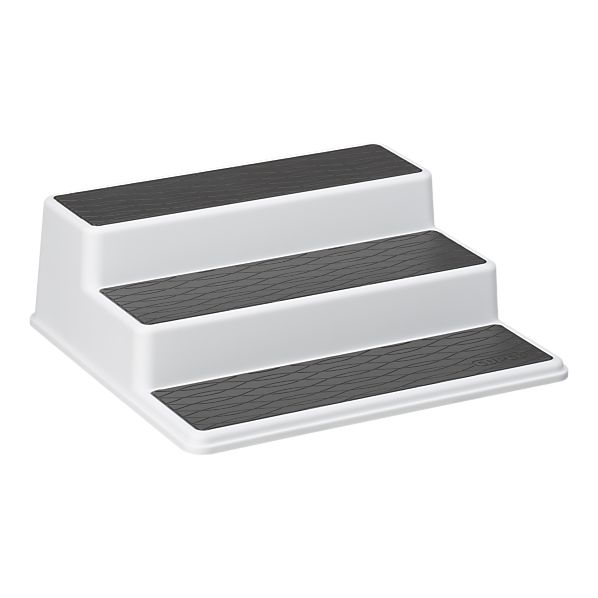
Cupboard Shelf


I have a couple wire shelves that I stick in my cupboards for extra elevated storage. They are wonderful! The best ones I have are in my bathroom cupboard and under the sink - they maximize space and promote the ease in finding your stuff.

Cabinet Organizers


If you have as many spices as I do - this is a great organizational tool for being able to find spices in the back of the cabinet.

Spice Jars


I love the idea of transferring store-bought spices into cute individual jars. These are adorable. And totally multi-functioning - you could use this easily as a multi-tasker.


Ceiling Pot Rack


This is a fantastic space-saving idea if you have an excess of pots & pans and not much extra storage space to give.

Let's move to closet and storage organization.


Over the door hooks


These are a wonderful space saving option for bathrooms, closets, storage rooms and kids play rooms. $2.99 from The Container Store is a great steal!

Over-the-door shoe organizers


There are tons of options for over-the-door shoe organization currently on the market. Here is Crate & Barrel's take.

Shoe Storage


Keeping your shoes off the floor allows for a clutter-free closet. This is a great solution to storing your shoes on the floor.


Sweater Bag Drawer


Don't have enough room in your closet for your winter and summer clothes? That's ok - grab a few sweater bags or containers and slide them under your bed with your seasonal apparel.


The Container Store is currently in Spring Organizational Sale mode - click here to find the closet location to you.

I happen to enjoy Crate & Barrel and The Container Store; neither company knows who I am or is in any way affiliated to Organized Ali. I write about products I use or would like to use.


Read More!

Friday, January 28, 2011

Glass Food Storage Containers

America's Test Kitchen just posted a review of glass food storage containers. Last summer I made the switch from plastic reusable containers to glass, due to the hype about microwaving plastic. I really like using glass containers and feel that they will last much, much, much longer than plastic ones.


Click for the review from the experts.

I use Pyrex glass containers and really like them! I purchased 2 sets of 3 various size bowls, as well as a set of rectangular storage containers. One thing I like about the bowls is that it's great for portion control because it lists the number of cups that it can hold.


The rectangular containers are terrific for sandwiches.

Of course, all of these containers can be used for other things than bringing your lunch to work or school. Keeping paperclips and office supplies or storing bobby pins and hair binders are the first things that come to mind on how to make these multi-taskers.


Read More!

Friday, June 11, 2010

Inbox Reduction

A little while back I read a fantastic book that was recommended to me called “Organize Yourself with Office 2007.” One of the focal points of this great text was about how many “inboxes” we have. Thinking about all of the places where we store new information is outrageous. One personal goal I have, since reading this book, is to limit all of the inboxes I have, specifically in my office.

To give you a better idea of what I mean when I say “inbox” here is a short list of inboxes that I have at work:

• E-mail inbox
• Mailbox
• Voicemail box on office phone
• Voicemail box on cell phone
• Paper messages to return a phone call
• Text messages from employees on cell phone
• Six stackable baskets for things that are coming in that I need to deal with, categorized of course
• To-do list on paper to add all of the items coming in that I need to deal with

That’s a lot! And that was just a quick 60 second brainstorm that didn’t even go into personal inboxes.

Honestly, inside that list of work-related inboxes there aren’t many spots where I can trim down and reduce incoming information overload. I can’t just cut out my voicemail on my office phone or cell, nor can I stop receiving e-mail (though I often wish I didn’t get so many e-mails!). But what I can do is manage how I store all of the information in my inboxes.
Six stackable baskets for things that are coming in that I need to deal with is a bit much, eh. I have reduced this substantially. Now, I really have one basket with things that I need to deal with, and the remaining five baskets are for filing things that I’m either working on or need to refer back to. I even turned one of those baskets into an outbox (things I need to mail).

One thing that I used to rely on heavily was little notes ALL OVER MY DESK. Those started cluttering everything and becoming a nuisance and getting lost among each other, so I have discontinued that habit. Instead – I create fewer notes but have a category for the notes. For example, I run an educational program where one of my responsibilities is to put together materials for my staff. Instead of having 17 notes all over my desk saying that Joe needs x, y, z and Jenna needs a, d, t and Hannah needs t, u, v, I have a list of who needs what materials. This sounds so trivial and obvious, but it has made such a big difference in my sanity. Oh, and I got some super cute Anne Taintor sticky notes that say “I dreamed my whole desk was clean.” They make me smile.

It’s the little things that you can do during your workday to make the 8-12 hours you spend there more organized and entertaining. Reducing my inboxes and information intake has been a minor adjustment to a major change.

Read More!

Thursday, August 13, 2009

Dorm Room Organization

As a semi-recent college graduate I remember the joys and the agony of spending an entire year living in a dorm room (I can't believe I survived!!). It's sure an exciting time in a young adult's life, but some basic organization will do any dorm room wonders. Clutter can accumulate quite quickly, especially in a college dorm, but it will begin to overpower a teeny tiny dorm room very fast if it gets out of hand.


The most important thing to think of is the layout of the room. This is so vital because dorm rooms are so teeny tiny that you must make the most out of your space to take advantage of the organizational potential. In my dorm room we were able to loft our beds. Under my bed went the futon and the comfy chair with storage ottoman and under my roommate's bed was the refrigerator, microwave and our food storage area plus one of our sets of stackable drawers. We wouldn't have been able to successfully have all of the things in our dorm room if we weren't able to loft the beds.

An absolute MUST in dorm life is at least one set of stackable drawers. Target and Bed Bath & Beyond have a huge selection of these (and they're probably on sale right now!). My dorm room had two sets in different sizes. One of the sets of drawers in my room was bright orange, which added a nice flare to the stark and dingy looking room. We stored supplies like tape, 3-M hooks, batteries, shower products and even clothes I think.


I do have to credit my roommate for pretty much all of the wonderful organizational items found in our dorm room. She brought most of them! And she is very creative so everything worked wonderfully.

My roommate brought in this great set of stacking cubes. We used these to store food in. These would also work well to store clothes, shoes, school supplies, books and shower products in.

The closets and the built in storage in my dorm room were actually quite substantial. Each of us had two sections of closets to store things in. Needless to say we had a lot of room to hang our clothes! I also employed a shoe tree and somehow hung it in my closet (mine is supposed to be an over-the-door shoe tree...). It worked really well, and I highly recommend if you're bringing a lot of shoes to college to use a shoe tree or some kind of shoe organizer.


One thing that I didn't think about at the time of my freshman year was over-the-door hooks. My roommate came prepared and brought two different sets. We used one on the back of our dorm door and the other was hanging from her bed (remember it was lofted). These were so amazingly handy to have! We used them to hang our backpacks, jackets, sweaters and big winter coats and scarves (we went to school in Iowa) from.

Under-the-bed storage is wonderful, especially in a dorm room. Since our beds were both lofted and hanging from the ceiling we couldn't really store things under our bed (well I suppose we could have...) but we did have a futon on the ground that we used to store things under. We used clear plastic containers to store little odds & ends in and then housed them under the futon.


If you need more tricks for dorm room organization, look to the upper classmen. I did take a lot of my current knowledge from their advice and experience as freshmen living in the dorms.

When it comes to dorm room organization, the name of the game is creative. You must be creative because you're working in such a small space, usually with limited resources and you're combining two people's things in to a tiny space big enough for a mouse to live in.

Read More!

Thursday, July 23, 2009

Scrapbooking Corner

I've got to start by saying that I'm not a huge scrapbooker. I enjoy doing it, I think I come up with some creative ideas but it takes a lot of time and it is quite an investment, and also requires a lot of organization to keep everything in its place. I do, however, have some great organization ideas and tips for you scrapbookers out there.


For the novice scrapbookers, such as myself, I would recommend a large plastic tub to store scrapbooking materials in. At this point, all of my scrapbook materials fit into one extra large under-the-bed tub. If I accumulate much more I would expand to smaller plastic tubs that still fit under my bed.

I know there are a lot of advanced scrapbookers who are quite talented and extremely creative. You guys probably have accumulated countless scrapbooking materials that need a home. Many really good scrapbookers like to have an area or a zone for their scrapbooking or other creative activities. My suggestion would be to create a zone in your basement, take ownership of an extra bedroom or hold the office or den hostage to your materials.


A large table is quite necessary so you can spread out photos, materials and papers while you're working. I like to stand up when I work on projects like this, so I would look for a large, square, counter-height table. My ideal table would have built-in storage between the legs or at the base. I would love cabinets or cubbies or shelves where I could store baskets or buckets of materials.

I really like the idea of mounting a pegboard on the wall and hanging materials such as scissors or ribbon. You could also hang a shelf or a bucket from the pegboard and store die cutters, pens or markers and other trinkets or embellishments for your scrapbook pages.

Most expert and advanced scrapbookers have a large supply of cardstock. Small drawers on wheels are a great storage idea for scrapbooking papers, storing mementos and keeping other supplies on hand. Labeling these drawers is a great idea and makes it look really professional. I also love the idea of storing cardstock in office-style file trays that you can stack on top of each other.

Other than that I think you should be set. Just remember the basics: keep everything in its place, eliminate clutter, clean up after yourself after every scrapbooking session and create a place for everything to go. Oh, and keep a trash and recycling nearby! You'll need it. Happy scrapbooking!


Read More!

Friday, July 10, 2009

Organizing with Reusables

Living in Seattle has made me into more of a recycling fanatic, as well as someone who tries to waste less. I like to put on my "creative thinking cap" and re-use things that I can. This is another cheap and easy way to stay organized on a budget!


Some things you can easily re-use as a storage container:

• Ice Cream tub (gallon size)

• Yogurt container (2 pound size)

• Deli takeout containers

• Margarine/sour cream/large cream cheese tub

• Pickle/jam/spaghetti sauce jar

• Coffee can

• Shoe box

• Any size can (think tomato sauce, soup, canned green beans)


What to do with them:
If you have kids (or if you're a crafty adult) you could turn this into a really cool and unique art project. This blog is about organization, not art, but an idea is wrapping the containers in a paper bag and decorating the outside - glue on sequins, glitter, whatever you have around the house.

Or, if you don't like seeing the manufacturer's design on the container, just wrap it in white paper and write what is inside of it.


I am always in need of more storage for little things like paper clips, other office supplies, jewelry, first aid supplies, hair binders and accessories, nail polish, kids trinkets and just plain junk. It's hard to beat these nifty little containers, especially since most of you probably have several of these in your cabinets or refrigerator at home.

Read More!

Thursday, June 11, 2009

Under the Bed Storage

Those of you who have ample room under your bed to store things should consider yourselves lucky! Especially if you can keep it out of sight with a cute bed skirt. I love that I can store things under my bed - it's easy, accessible and no one knows what's in this storage space. If you're considering purchasing a really nice wood bed frame, you aren't necessarily out in the cold on this one.


I have a lot of scrapbooking supplies/crafty stuff (not enough to warrant a separate scrapbooking table or area), extra office supplies, sewing supplies and a whole bunch of old scrapbooks and photo albums, as well as photo boxes. These go under my bed. They could go in a closet on a shelf, but I don't have any more room where they can be easily accessible.

How I do it: I went out to Target and bought a whole bunch of small clear plastic containers with lids (see picture), one for each type of belonging, and arranged my miscellaneous items inside. Each container has a neatly written label for easy searching, and I only go one box deep under the bed, meaning that just the perimeter of the bed has things under it, again to allow easy access. When I need something from under there it is exceptionally simple to locate it and grab it.

Why under the bed storage is great: the obvious point here, being, that it's hidden, plus it's incredibly easy to find - if your under the bed area is organized well, there's a lot of square footage under a bed which translates into a lot of storage space and it allows you to be creative by using your space creatively.

Other ideas: I personally love the clear plastic containers with lids, but some other ideas are: cute baskets if they fit under your bed, any other type of bucket or bin as long as it slides under your bed and won't tip over and spill, reusable food storage containers, small boxes, shoe boxes and customized under the bed storage systems (mainly for shoes).

For those of you who are considering purchasing a wooden bed frame, think about one that has storage built in. If I was to buy a new wood bed I wouldn't buy one that didn't come with any type of storage. That's not allowing you to maximize your space.

Read More!

Tuesday, May 19, 2009

Get Rid of it!

I think that spring is the ultimate time to go through everything in your house and get rid of stuff that you don't use, that doesn't fit you (or your family) anymore or that's broken. This is kind of like a seasonal cleaning, but with an emphasis on de-cluttering through "stuff removal."

I would suggest going room by room through your house to create an inventory to figure out what in the world is in your house and taking over your precious space. Do this slowly so you don't overwhelm yourself. Start maybe someplace small, like your bedroom or bathroom, and work from there. Think about each thing as you go through it and ask yourself some questions:

• When was the last time I used this?
• Is it broken? Can I fix it?
• Did I even know I had this?
• Does this article of clothing fit me/children/spouse?
• When was the last time I wore this?
• Do I NEED this still?
• Could I live without this?

The questions above should get you thinking.

• If you didn't wear an article of clothing during the last season, get rid of it!
• If an article of clothing doesn't fit you at the present time, get rid of it!
• Didn't know you had something still? There's a good chance you'll forget that again, so get rid of it!
• Haven't used this in the last two years? Get rid of it!
• Is it broken? Can I fix it? If not, get rid of it!
• Is this essential to my existence? Probably not.
• Can I live without it? Probably.

It is so rewarding to go through the house with big garbage bags and clearing out things that you have no use for anymore. There is absolutely no point in keeping something just to keep it. That's called being a packrat, or worse: a hoarder. My task for you is to just get rid of it. The longer you procrastinate about getting rid of the messy buildup in your house the closer it comes to looking like you have become a hoarder.

If it helps you to think of it this way: you could throw a garage sale or sell your belongings online, give gently used clothing to consignment stores, sell appliances to secondhand stores, or donate your clothing to a charity to help others who are less fortunate. Pick one of those or your own motivator and go GET RID OF IT!

Read More!

Wednesday, April 22, 2009

Moving Efficiently

One of my least favorite things to do is move to a new home. I can't even keep track of the number of times I've moved in my life because it is such a high number. It seems like things always get lost in a move and people just run around like chickens with their heads cut off trying to get everything done in the smallest amount of time possible. Moving is very important, but incredibly stressful, so hopefully I can give you some tips on how to remain calm and organized and get through it efficiently.


Well, if you're planning to move I'm assuming you have a short timeframe to prepare. So, first thing first: stockpile your home with boxes, boxes, boxes galore. And packing tape! Oh, and some permanent markers to label your boxes. Hmm, better stock up on newspapers and bubble wrap, too. Boxes can be purchased at office supply stores, or you can fend for some free boxes at grocery stores, liquor stores, gas stations, restaurants and really any retail business you can think of. This all unless, of course, you have a packing service. Then, you can just sit back and watch the movers do everything.


Need I even say that moving is the perfect time to get rid of belongings you no longer use or need? Set aside some boxes for donating. Or, better yet, throw a garage sale before you begin the moving process. Whatever you have left after your sale can go straight to charity. Don't overlook Internet sites like craigslist to sell appliances, furniture and even clothing.

I've already mentioned that I really hate moving. It's so much work and it's really hard to pack away your home and not be able to access those belongings. So, in order to avoid packing things you still use I would advise you to plan carefully. Start packing the things you hardly ever use: books, things in storage (which should sort of already be "packed"), extra office supplies, off-season clothing, random and hardly ever used tools, movies and CDs, and old keepsakes are good places to start. From there, go in phases as your moving date gets closer and closer. Start cleaning as you go to avoid a last minute cleaning frenzy. The last things you should pack are: daily toiletries and supplies, a few days worth of clothing and shoes, cleaning supplies (you have to leave your place clean, right?) and a few plates and glasses, etc. Think about what you use most often and go down a list until you figure out what in your home you use least often and pack according to that.

If it helps you to go room by room, I would suggest that. Start in your storage room and make sure everything is securely packed and ready for the moving truck. Work from there. I like to create a task list with specific tasks I need to accomplish and then prioritize each task into a chronological order to complete.

When it comes to packing, do pack appropriately and efficiently. Your unpacking efforts will flow seamlessly if you pack each box pertaining to one specific room. It is incredibly helpful to be very detailed when labeling boxes. If you are hiring packers make sure that you supervise this and be up front about your labeling expectations -- trust me, you don't want to be searching for your bedding and have it end up in the box labeled "pots & pans."

When it comes to unpacking I would highly suggest sticking to one room at a time. Unpack just like you packed, so you put away the items you use most often followed by your belongings used least often. This will help you get into your new home and find commonly used items without rummaging for them.

Quick Tips:
• Schedule, confirm and RE-CONFIRM your moving truck/moving company
• Obtain extra (times 10) boxes, rolls of tape and packing materials. You will run out!
• Get some easy to move snacks and water bottles for the day of your move
• Prepare an extra large cooler and ice or cold packs to put your perishables in during the move (do this last) -- only do this if you're moving close by
• Make alternate accommodations for your pet(s) the day of your move -- see if you can pawn the kids off on a friend or relative, too

Read More!

Saturday, March 28, 2009

The Dreaded Basement

I have to admit that I've put off writing this piece for a while. Basements are tough areas to keep organized and clean, mostly because they tend to be used as a storage facility for your family's randoms. But, I must say that generally speaking, basements have amazing potential to become useful in a variety of ways.

One reason I've been putting off writing about basements is because there is so much variance from one basement to the next, which makes it tricky for me to write something concise that everyone can benefit from. Everything I say here will greatly depend on the configurations of your basement and really, how much stuff you have in it, what you use your basement for and whether or not you have kids. So, knowing that, read on...

As with everything, I like to start by taking a general inventory. What is in your basement? Go through everything you have down there. Figure out what is vital to your existence and what can move on to another family or the landfill. Once you have made your final selection, do a very, very, very, very deep clean. Basements are usually stinky and often left unclean on a regular basis.

Unless your basement is the size of a small shoe box and you literally only use it for storage, I would advise you to create zones for your basement. These zones are to help you to identify the purposes of the basement. Do you use your basement just as a super large storage room? Is your basement a part of your living space? Do your kids use this space as a play room? Is your basement finished or unfinished? Is your basement a "man cave"? Do you keep your sewing and scrapbooking and other hobby projects in the basement? Is your basement your tool room? Does your basement have actual finished rooms or is it one open space? Can you entertain in your basement? Those are some questions I came up with off the top of my head that may help you to identify various zones for the space. If you've got a lot going on in your basement creating zones will help unify the space as a whole while giving each area its own function.


Before I move on, I must caution you to consider if it is possible at any given time for your basement to either flood or get damp floors. Knowing and preparing for this can be a lifesaver if you ever have to deal with water in your basement. That said, consider shelving that is off the floor or plastic storage bins if you must store things on the floor.


This space is like any other in your home. When you create your zones think about how you can best organize each individual zone. Most zones have different capabilities and needs. Consider using plastic storage bins (from super teeny to huge gigantic tubs), cubbies, any variety of shelving, baskets, a set of drawers of any kind, file cabinets, cardboard boxes, buckets or specialized organizational paraphernalia for things like tools, scrapbooking or housing a hobby collection. Place your items nicely on a shelf, on the ground, on a table or wherever works for you in your zone. Make everything look nice, write a descriptive label and move on.

The vital part to this overhaul is following through. After you use something from your zone make sure to put it back where it goes! This sounds so incredibly trivial but I think this is the most common misstep of anyone and everyone. You need to follow through. You worked so hard to clean out your basement and create an organizational system that works for you and looks nice, so why would you not follow through by putting things away? Reward yourself if after one, two, six, twelve months goes by and you still have a wonderfully organized basement. That is something to celebrate - especially if you have a basement like some I have seen.

Read More!

Thursday, March 26, 2009

Bills in a Box by Jean Chatzky

This article was from "'Make Money, Not Excuses': Bills in a Box" by Jean Chatzky on oprah.com. Chatzky gives you a very in-depth look at her organizational system for bills - what you should keep, what you should toss, how you should store it and how long you need to save important files for.

You probably think you have no idea how to sort and organize your finances. But in fact, you have a very good model. You know how to clean a closet. And you are going to use the very same skills to get your financial paperwork in tip-top shape.

In this exercise, a file box with a carry-handle becomes your closet. If you don't have one, you can pick one up at any office supply store and many drugstores. If you'd prefer not to spend the money, that's okay. You can use a filing cabinet or a drawer that can accept hanging folders. My preference is for the box, though, because it's portable. If you want to pay bills on your wireless laptop while sitting outside on your back porch, you can tote the box with you. If you need to visit your accountant, you can take it along so that you'll be able to answer any of his or her questions. Once you have the box, here's what you need to do.

Get the Right Stuff
When you clean your closet, you need to have the right hangers for pants, sweaters, suits, and so forth. When you organize your finances, you need office supplies.

* Hanging folders (Note: If you are married, get hanging folders in three different colors so that you can see quickly what's yours, what's mine, and what's ours.)
* Sharpie markers (if you have neat handwriting) or a label maker (if you don't)
* Manila folders
* Stamps and envelopes (so you're not always wasting time scrounging for postal supplies)
* Post-it notes
* Letter opener (to avoid paper cuts)
* Stapler
* Calculator
* Pens and pencils

Put the Box to Use
Before you start filing, neatly label your hanging folders. My suggested categories are: Taxes, Insurance, Health Care, Banking, Retirement/Brokerage (retirement accounts are many people's brokerage accounts), Credit Cards, Home, Auto, Legal, Estate (for a copy of your will, living will, health-care proxy, and other estate-planning documents), To-Do, To-Be-Paid.

You may also want folders labeled: Pets, Kids, Mom and Dad, Benefits, Flexible Spending, Travel.

Next, label manila file folders to put into each of the hanging folders. Suppose you have three credit cards—MasterCard, Discover Card, and Banana Republic. You'll want a manila folder for each of them labeled with the year: MasterCard 2006, Discover Card 2006, Banana Republic 2006. When the year turns to 2007, you will make new manila folders labeled "MasterCard 2007," "Discover Card 2007," and so on. Once you pay your taxes and close your personal books on 2006, you can take all the 2006 folders out of your box and move them to a file drawer in which you have hanging folders set up in a similar way. That way your bills-in-a-box filing system remains portable, and you will be able to put your fingers on any important piece of paper at any particular point in time.

You'll eventually get good at figuring out what category needs its own folder. Give yourself leeway to create the folders you think you will need.

And that's it. Now you're set to start organizing using the Four Ds.

The Four Ds #1: Dump
Here are the steps you need to take. I call them the Four Ds. And remember, this is merely a big closet you're cleaning. It just happens to be a closet full of paper.

If you clean a closet as I do, the first thing you do after you buy hangers is pull everything off the racks and toss it onto your bed or the floor. Do the same with your bills and paperwork. If it's all sitting in a pile on your kitchen table, then move it to an area that can be messy for a little while. This can take anywhere from several hours to several days, depending on how much stuff you have to plow through and how much time you have to devote to the process. One thing is certain: You don't want to have to move your workstation halfway through.

Next, go through the other repositories for your bills and paperwork and add those to the pile. Your briefcases, tote bags, desktop, pocketbooks—every one of them should be given the once-over.

The Four Ds #2: Distribute
When cleaning the aforementioned closet, you separate your clothing into piles—things you want to keep, things you want to toss, and things you're not quite sure of. With paperwork, you do the same.

Take the statements or bills out of their envelopes. Open them to full size (unfolded they take up less room). Staple the pages of each month's statement together so they don't get lost.

If you find a bill that needs to be paid, write a check on the spot, put it in an envelope and stamp it so you don't have to deal with it again. Then immediately record the transaction in your checkbook register. Don't let the fact that you're spending time getting organized result in late fees on your credit card bills.

Then put the paperwork into the proper folders, oldest bills first, so that when you open a folder the newest statement is right on top.

The Four Ds #3: Diminish
In 2004, the American Journal of Psychiatry published results of a study that said chronic hoarders—people who seem to save things with more passion than the rest of us—have decreased activity in the parts of the brain used for decision making and problem solving. In other words, there may be a clinical reason why you can't decide what to keep and what to get rid of. That's why you need rules. With clothing, the rule is: If you haven't worn something for two years, it goes. With bills and paperwork, the rules vary depending on what you're looking at. ATM receipts need to be kept only until you receive that month's bank statement and verify that the numbers are correct. Tax returns have to be kept for years and years.

Here's a list to keep you straight. Make a copy of it, then tape the list to the inside top of your file box.

Keep as long as you have the underlying asset (such as a house or a car):

* Insurance policies
* Receipts for important purchases like technology, art, antiques, rugs, jewelry (or anything else you may need a rider on your insurance policy to cover)
* Receipts for renovations or other investments made in the property
* Titles
* Warranty papers

Keep forever in a safe or safe-deposit box; and keep a second copy, if possible, in your attorney's office or another safe location off-premises:

* Adoption papers
* Appraisals
* Birth certificates
* Citizenship papers
* Custody agreements
* Deeds
* Divorce papers
* Financial aid documents
* List of credit card numbers, bank and brokerage statements, and insurance policies, and toll-free contact information
* List of important contacts (lawyer, accountant, doctor, children, parents, etc.)
* Military records
* Powers of attorney (medical and financial)
* Stock certificates
* Wills/Living wills

Toss IMMEDIATELY:

* Credit card solicitations
* Marketing material included in bank and credit card statements

Throw out after ONE MONTH or when you reconcile with a bill or bank statement:

* ATM receipts
* Prospectuses and other information about investments you are considering making (if you're not going to read them, toss immediately)
* Receipts for purchases (assuming you're keeping them or there's no warranty)

Throw out AFTER ONE YEAR or when end-of-year consolidated statements come in and you have filed the taxes for that year:

* Bank statements
* Brokerage statements
* Cell phone, cable, telephone, and Internet statements (except when deducting for work-related expenses)
* Credit card bills
* Pay stubs
* Social Security statements
* Utility bills

Throw out AFTER SEVEN YEARS (when no longer needed for tax purposes):

* Child-care records
* Flexible spending account documentation
* 401(k) and other retirement-plan year-end statements
* IRA contributions
* Purchase records for investments
* Records of charitable donations
* Records on houses you've sold
* Tax returns and backup documentation

What should you do with the stuff you toss? Shred it! A crosscut shredder for at-home use can burn through five sheets of paper at a time. Heavy-duty machines can even cut through old credit cards. You can buy a decent machine for about $100 to $150. And if there's not too much paper to go through, you can tear it up yourself!

The Four Ds #4: Due Diligence
Now that you have a "system," all that's left to do is maintain it. For that, you need three kinds of upkeep.

1. Daily Upkeep
What is the quickest way to turn a neat closet into a messy one? Toss today's dirty clothes on the floor. Every day, when the mail comes in, open up your file box, and open the bills one by one. Write checks (by hand or electronically), deduct the amount of each check from your check register (or electronically—watch as the bank does it for you), stamp the envelope, and put it directly in the mailbox to go out the next day or on the counter with your keys so you'll remember to take it with you the next time you leave the house. Do not procrastinate and say you'll pay bills later, after you've had dinner, after you've had a glass of wine. Start this task and finish it in one swift motion.

And what's Plan B for the night that just doesn't work? The baby is crying, the dog poops on the floor, dinner…oh, heck, you can't even think about dinner. You'll be lucky if you can grab a bowl of Raisin Bran in time for the Friends rerun at 11. In that case, put all the bills that need to be filed in the same place—in your "To-Be-Paid" folder. Whatever you do, don't start separating them into separate folders. Don't put the insurance bill in the "Insurance" folder, the credit card bill in the "Credit cards" folder. You'll never see those bills again, and you'll get hit by late fees. Give yourself a break and deal with your bills as soon as you can, preferably tomorrow.

2. Intermittent Upkeep
Every time you open a new account, take out a new insurance policy, or do something else that requires record keeping, immediately make a new folder. Print a label, and figure out where the folder goes. The first thing that goes into the new folder is the contract you signed, so that if you ever need to refer to it, you know precisely where it is.

3. Annual Upkeep
Every year, after you've filed your taxes, remove last year's manila folders from the file box and place them in another set of hanging files in a filing cabinet or drawer. It is important to arrange both sets of files in the same way so that you'll know precisely where to find any document. You will even be able to tell another person where to find a particular document if needed.

Women spend an average of 55 minutes every day searching for stuff, including 8.2 minutes looking for a receipt. Now that you're organized, wouldn't you like to turn that extra hour into extra cash?

Read More!

Tuesday, March 24, 2009

Containers, Containers, Containers

If you're starting a huge organization overhaul of your house for this years' spring cleaning mission and notice that you need more storage containers, read on! There are countless different forms of containers that you can use for home, car or office storage. I'm certain that I don't even know of all of the storage containers sold in stores these days. I have a select group of favorite types of containers that I use frequently throughout my home and home office. I took a lot of pictures of containers that I use throughout my house to hopefully give you an idea of how to be more creative.


My utmost favorite container is a clear plastic storage box, shown below. Sorry to choose brands, but I really, really like Sterilite storage containers. I use the 4 quart storage box for storing random things (crafty stuff, markers, thank you cards, office supplies) under my bed. It's great (check out the picture) - it is ultra convenient and all of that stuff is contained and hidden nicely under my bed. I label each box and know exactly what I'm going to find when I open it. Other than the 4 quart storage box, I use the drawer system and many other sizes of storage boxes. They really can store anything.


Some containers that I have become a big fan of recently are bowls or coffee mugs (countless storage capabilities - paperclips, buttons, rubber bands, lip balms, sewing tools, loose screws...), gift boxes (use the largest one to store all of the smaller gift boxes that you accumulate), any type of basket or tote or bucket ( I use a cute nickel bucket to store Post-it notes and another one for greeting cards), shoe boxes (endless possibilities here - I store some small tools in one in our linen closet), old jam jars or other glass jars, cardboard boxes and deli counter containers/other reusable storage containers. Just be creative! Look around your house - I'm sure you can come up with some type of container that can benefit you and your family. Get your kids involved too. I'm sure they'd love to paint a shoe box or create a label for a storage container or proudly display their new marble and rock collection in a parent approved jar.


Specifically for your office, depending on the type of office you have, I think that drawer organizers are exceptionally fantastic, as well as small cups or bowls on your desk to store odds and ends or loose change in, not to mention filing cabinets and file trays to keep your papers organized and off of your desk, as well as a dedicated container for your emergency kit or personal materials - assign a drawer and place your items in a basket or a toiletry tote.


Above are some photos from around my home. We'll start with my Sterilite drawer set in my den- the top drawer is the "junk drawer" where the tape, batteries, envelopes, super glue, etc. belongs. Middle drawer houses the cords and wires - each cord is wound up and secured with a zip tie. This sounds a bit anal, but trust me, if all of those cords were in there without being individualized I would never get to the one I want. The bottom drawer (not pictured) is just extra paper, notebooks and folders. Next stop is the linen closet where we store some basics plus the extra household items. In the linen closet I use a 4 quart container to store medicines and first aid supplies, a perfume box to store my nail polish, a bucket to hold cleaning supplies, and a wire basket to keep my sunscreen in. Lastly is a view of my bathroom cabinet under my sink. My favorite part of that space is the platform that is on the right side. I have a bucket where I store hair products and a sectioned container that stores hair accessories, then back in the left corner is a small basket with perfumes in it. I can't imagine what the space would look like without containers!

Read More!