I think that spring is the ultimate time to go through everything in your house and get rid of stuff that you don't use, that doesn't fit you (or your family) anymore or that's broken. This is kind of like a seasonal cleaning, but with an emphasis on de-cluttering through "stuff removal."
I would suggest going room by room through your house to create an inventory to figure out what in the world is in your house and taking over your precious space. Do this slowly so you don't overwhelm yourself. Start maybe someplace small, like your bedroom or bathroom, and work from there. Think about each thing as you go through it and ask yourself some questions:
• When was the last time I used this?
• Is it broken? Can I fix it?
• Did I even know I had this?
• Does this article of clothing fit me/children/spouse?
• When was the last time I wore this?
• Do I NEED this still?
• Could I live without this?
The questions above should get you thinking.
• If you didn't wear an article of clothing during the last season, get rid of it!
• If an article of clothing doesn't fit you at the present time, get rid of it!
• Didn't know you had something still? There's a good chance you'll forget that again, so get rid of it!
• Haven't used this in the last two years? Get rid of it!
• Is it broken? Can I fix it? If not, get rid of it!
• Is this essential to my existence? Probably not.
• Can I live without it? Probably.
It is so rewarding to go through the house with big garbage bags and clearing out things that you have no use for anymore. There is absolutely no point in keeping something just to keep it. That's called being a packrat, or worse: a hoarder. My task for you is to just get rid of it. The longer you procrastinate about getting rid of the messy buildup in your house the closer it comes to looking like you have become a hoarder.
If it helps you to think of it this way: you could throw a garage sale or sell your belongings online, give gently used clothing to consignment stores, sell appliances to secondhand stores, or donate your clothing to a charity to help others who are less fortunate. Pick one of those or your own motivator and go GET RID OF IT!
Read More!
Showing posts with label basements. Show all posts
Showing posts with label basements. Show all posts
Tuesday, May 19, 2009

Friday, May 8, 2009
Toys/Play Area Organization
I must mention again that I do not have kids. I have knowledge of what having kids is like and I have seen enough messy (and neat) playrooms and toy zones to understand the concept around organizing your kids stuff.

I have to start by saying that the most organized families I know corral their kids toys in specific rooms. This seems obvious but most families do not differentiate between playroom, bedroom, parent's bedroom and kitchen based on the toy storage. So, that said, I think it's important to consider setting toy boundaries. Keep the toys in a playroom and the kids room or the basement and their bedroom. Notice that I didn't include the kitchen, dining room, office, mom and dad's room, etc. I realize that sometimes it is beneficial to have toys readily available to the kids to keep them entertained -- but put them away when they're done playing with them in toy-free rooms.
Now that you've moved the toys out of every room it's time to start organizing them. This is where creativity and innovation comes into play. The options are endless with what you can do to create an organized playroom for your kids to hang out in (not to mention learn responsibility by keeping their toys picked up!).
Here are some ideas to get you thinking about what you can do with various storage containers:
• Shelves: excellent option for books, games, puzzles, DVDs and to store buckets or baskets on
• Bins (open): the perfect container for the "loose" toys, like cars or trucks, a train set, Barbie accessories, or farm animals, where the kids can toss them in and find them later
• Plastic storage bins (with lid): great place to keep art supplies, video games, Barbie's and other dolls, school supplies, sporting equipment or stuffed animals
• Baskets/buckets: good for storing small toys that need to be kept separate, like nail polish, checkers (or other game) pieces, play dough and colored pencils
• Laundry baskets or barrels: perfect for super large toys or stuffed animals that the kids can throw in there without having to leave out on the floor

Consider getting a stockpile of several of these items and having your kids help you organize their new play area. Engage them in an art project to create labels for storage bins and buckets and have them tell you how they want the room set up. The key with this organizational overhaul is to get them to be held accountable for keeping the toys picked up and kept in their appropriate spot (I see a perfect opportunity for a reward chart here!).
Read More!

I have to start by saying that the most organized families I know corral their kids toys in specific rooms. This seems obvious but most families do not differentiate between playroom, bedroom, parent's bedroom and kitchen based on the toy storage. So, that said, I think it's important to consider setting toy boundaries. Keep the toys in a playroom and the kids room or the basement and their bedroom. Notice that I didn't include the kitchen, dining room, office, mom and dad's room, etc. I realize that sometimes it is beneficial to have toys readily available to the kids to keep them entertained -- but put them away when they're done playing with them in toy-free rooms.
Now that you've moved the toys out of every room it's time to start organizing them. This is where creativity and innovation comes into play. The options are endless with what you can do to create an organized playroom for your kids to hang out in (not to mention learn responsibility by keeping their toys picked up!).
Here are some ideas to get you thinking about what you can do with various storage containers:
• Shelves: excellent option for books, games, puzzles, DVDs and to store buckets or baskets on
• Bins (open): the perfect container for the "loose" toys, like cars or trucks, a train set, Barbie accessories, or farm animals, where the kids can toss them in and find them later
• Plastic storage bins (with lid): great place to keep art supplies, video games, Barbie's and other dolls, school supplies, sporting equipment or stuffed animals
• Baskets/buckets: good for storing small toys that need to be kept separate, like nail polish, checkers (or other game) pieces, play dough and colored pencils
• Laundry baskets or barrels: perfect for super large toys or stuffed animals that the kids can throw in there without having to leave out on the floor

Consider getting a stockpile of several of these items and having your kids help you organize their new play area. Engage them in an art project to create labels for storage bins and buckets and have them tell you how they want the room set up. The key with this organizational overhaul is to get them to be held accountable for keeping the toys picked up and kept in their appropriate spot (I see a perfect opportunity for a reward chart here!).
Read More!
Saturday, March 28, 2009
The Dreaded Basement
I have to admit that I've put off writing this piece for a while. Basements are tough areas to keep organized and clean, mostly because they tend to be used as a storage facility for your family's randoms. But, I must say that generally speaking, basements have amazing potential to become useful in a variety of ways.
One reason I've been putting off writing about basements is because there is so much variance from one basement to the next, which makes it tricky for me to write something concise that everyone can benefit from. Everything I say here will greatly depend on the configurations of your basement and really, how much stuff you have in it, what you use your basement for and whether or not you have kids. So, knowing that, read on...
As with everything, I like to start by taking a general inventory. What is in your basement? Go through everything you have down there. Figure out what is vital to your existence and what can move on to another family or the landfill. Once you have made your final selection, do a very, very, very, very deep clean. Basements are usually stinky and often left unclean on a regular basis.
Unless your basement is the size of a small shoe box and you literally only use it for storage, I would advise you to create zones for your basement. These zones are to help you to identify the purposes of the basement. Do you use your basement just as a super large storage room? Is your basement a part of your living space? Do your kids use this space as a play room? Is your basement finished or unfinished? Is your basement a "man cave"? Do you keep your sewing and scrapbooking and other hobby projects in the basement? Is your basement your tool room? Does your basement have actual finished rooms or is it one open space? Can you entertain in your basement? Those are some questions I came up with off the top of my head that may help you to identify various zones for the space. If you've got a lot going on in your basement creating zones will help unify the space as a whole while giving each area its own function.
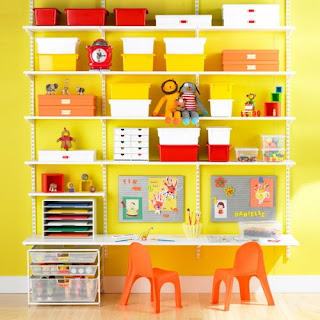
Before I move on, I must caution you to consider if it is possible at any given time for your basement to either flood or get damp floors. Knowing and preparing for this can be a lifesaver if you ever have to deal with water in your basement. That said, consider shelving that is off the floor or plastic storage bins if you must store things on the floor.
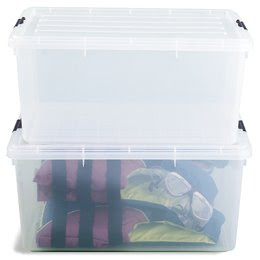
This space is like any other in your home. When you create your zones think about how you can best organize each individual zone. Most zones have different capabilities and needs. Consider using plastic storage bins (from super teeny to huge gigantic tubs), cubbies, any variety of shelving, baskets, a set of drawers of any kind, file cabinets, cardboard boxes, buckets or specialized organizational paraphernalia for things like tools, scrapbooking or housing a hobby collection. Place your items nicely on a shelf, on the ground, on a table or wherever works for you in your zone. Make everything look nice, write a descriptive label and move on.
The vital part to this overhaul is following through. After you use something from your zone make sure to put it back where it goes! This sounds so incredibly trivial but I think this is the most common misstep of anyone and everyone. You need to follow through. You worked so hard to clean out your basement and create an organizational system that works for you and looks nice, so why would you not follow through by putting things away? Reward yourself if after one, two, six, twelve months goes by and you still have a wonderfully organized basement. That is something to celebrate - especially if you have a basement like some I have seen.
Read More!
One reason I've been putting off writing about basements is because there is so much variance from one basement to the next, which makes it tricky for me to write something concise that everyone can benefit from. Everything I say here will greatly depend on the configurations of your basement and really, how much stuff you have in it, what you use your basement for and whether or not you have kids. So, knowing that, read on...
As with everything, I like to start by taking a general inventory. What is in your basement? Go through everything you have down there. Figure out what is vital to your existence and what can move on to another family or the landfill. Once you have made your final selection, do a very, very, very, very deep clean. Basements are usually stinky and often left unclean on a regular basis.
Unless your basement is the size of a small shoe box and you literally only use it for storage, I would advise you to create zones for your basement. These zones are to help you to identify the purposes of the basement. Do you use your basement just as a super large storage room? Is your basement a part of your living space? Do your kids use this space as a play room? Is your basement finished or unfinished? Is your basement a "man cave"? Do you keep your sewing and scrapbooking and other hobby projects in the basement? Is your basement your tool room? Does your basement have actual finished rooms or is it one open space? Can you entertain in your basement? Those are some questions I came up with off the top of my head that may help you to identify various zones for the space. If you've got a lot going on in your basement creating zones will help unify the space as a whole while giving each area its own function.

Before I move on, I must caution you to consider if it is possible at any given time for your basement to either flood or get damp floors. Knowing and preparing for this can be a lifesaver if you ever have to deal with water in your basement. That said, consider shelving that is off the floor or plastic storage bins if you must store things on the floor.

This space is like any other in your home. When you create your zones think about how you can best organize each individual zone. Most zones have different capabilities and needs. Consider using plastic storage bins (from super teeny to huge gigantic tubs), cubbies, any variety of shelving, baskets, a set of drawers of any kind, file cabinets, cardboard boxes, buckets or specialized organizational paraphernalia for things like tools, scrapbooking or housing a hobby collection. Place your items nicely on a shelf, on the ground, on a table or wherever works for you in your zone. Make everything look nice, write a descriptive label and move on.
The vital part to this overhaul is following through. After you use something from your zone make sure to put it back where it goes! This sounds so incredibly trivial but I think this is the most common misstep of anyone and everyone. You need to follow through. You worked so hard to clean out your basement and create an organizational system that works for you and looks nice, so why would you not follow through by putting things away? Reward yourself if after one, two, six, twelve months goes by and you still have a wonderfully organized basement. That is something to celebrate - especially if you have a basement like some I have seen.
Read More!
Subscribe to:
Posts (Atom)

 Posts
Posts


